Let's keep on moving
And not ignore what our body is trying to tell us.

Last winter, I dragged twenty or so bags of wood pellets from the car into our house. I used a sled, yet there was no snow on the ground, so there was serious friction. You know that feeling — you’re almost done, it’s cold, you promised yourself you’d do it, so you just... agh, have to finish. And I did. What I didn’t do was pay attention to the increasing complaint my right knee sent up with each trip.
A pinch here and there. I ignored it. Weeks passed. Then I noticed something during yoga: my balance was off. Poses I had held confidently for years suddenly felt unstable, wobbly. My knee had quietly gotten weaker while I wasn’t looking. And then somehow the pain migrated — the way pain does when you compensate and shift weight and pretend things are fine — up into my hip. A few months into it, the diagnosis came eventually: tendonitis and bursitis. Inflammation in the tendons and the small fluid-filled sacs that cushion my hip joint.
I share this not for sympathy, but because I suspect many of you have your own version of this story. A thing you pushed through, then another, until your body finally said: enough, we are going to have this conversation now.
So here we are, having it.
Our bodies are made to move
Not occasionally. Not in one concentrated hour at the gym. Constantly, in small doses, throughout the day.
Humans evolved as walkers. Hunter-gatherers covered several kilometers daily — not as exercise, but for survival. Sitting for long stretches is a remarkably recent invention, and our bodies have not caught up. The chair, the desk, the car, the long haul flight, the couch — these are novelties that our physiology was not designed to accommodate for hours at a time.
And the science on this is now unambiguous.
Our joints are not self-lubricating at rest — they depend on movement to circulate synovial fluid, the liquid that keeps cartilage cushioned and surfaces gliding smoothly against each other. Sit for long enough, and that fluid stagnates, then decreases, potentially accelerating wear and tear. Our muscles fare no better. Muscle fibers shorten during inactivity, contributing to stiffness, and less hyaluronic acid — a major component of synovial fluid — further compounds joint stiffness. The hip flexors, which spend hours in a contracted position every time we sit, gradually tighten and weaken. The glutes — our largest and most stabilizing muscle group — essentially switch off.
Over time, this creates exactly the kind of vulnerability that leads to what happened to my knee: a joint inadequately supported by the muscles around it, one awkward load away from injury. Joint stiffness from prolonged sitting can also contribute to developing chronic inflammatory conditions such as arthritis. The body adapts, quietly, until it doesn't.
The circulatory system takes its own hit. When we sit, the large muscles of the legs — our body's most powerful blood pumps — go quiet. Blood pools in the lower limbs rather than circulating efficiently back to the heart. Prolonged sitting-induced blood pooling in the lower legs can increase blood pressure through increased sympathetic nerve activity and peripheral vascular resistance. A 2024 study published in the American Journal of Hypertension found that just three hours of uninterrupted sitting significantly increased blood pressure variability in young, healthy adults — not older adults, not people with existing conditions. Young, healthy adults.
And here is the part that surprised me most: research has shown that sitting is a distinct risk factor, separate from a lack of exercise. You can't simply cancel out eight hours of sitting with a one-hour workout. Exercise and reducing sitting time are two separate health behaviors, and both matter independently. The good news is that the fix is genuinely small — a short walk or a few squats every thirty to forty minutes is enough to interrupt the cascade and get blood moving again. And when we cannot stand up, we can lift our heals to activate our soleus, the muscle located in the back of our leg. Often called the second heart, the soleus pumps blood from our lower extremities to our heart.
There is more. A long-term study found that sitting for extended periods — even in people who exercise daily — can shrink areas of the brain associated with memory and increase the risk of cognitive decline, particularly in adults over 50. Let that land for a moment. Even if you run every morning, once again, what you do with the other 15 or so hours of awake time matters. In a study published by JAMA in 2023, researchers found that people who had been inactive for at least 10 hours per day had a higher risk of dementia (+50% risk) than those who spent more time moving.
The body needs movement — not as a luxury, rather as maintenance, and dare I say like our hunter-gatherer ancestors, as survival?
What movement actually does for your brain
When we move — at a minimum a brisk walk — we trigger the release of a protein called BDNF: Brain-Derived Neurotrophic Factor. Scientists compare it to fertilizer for our brain. BDNF is a critical exercise-induced modulator of neuroplasticity (the brain’s ability to adapt), including neurogenesis — the process by which our brain grows new neurons. And here is the part I find most remarkable: neurogenesis persists in the human brain as long as we move. In other words, our brain can keep growing new cells into our eighties and nineties, it just needs us to keep moving to do it.
Walking may be enough. A 2025 systematic review highlighted the potential role of moderate- and high-intensity walking as a lifestyle intervention for sustaining brain health — and “lifestyle intervention” is the key phrase. Not a special event. A daily practice woven into how we live.
Add to that some weight-strengthening activities 2 or 3 times a week to maintain muscle mass/strength/power, and some calisthenics using our body weight to especially work the glutes (our primary engine for walking, running, and climbing stairs), and we might be golden. No need for expensive equipment.
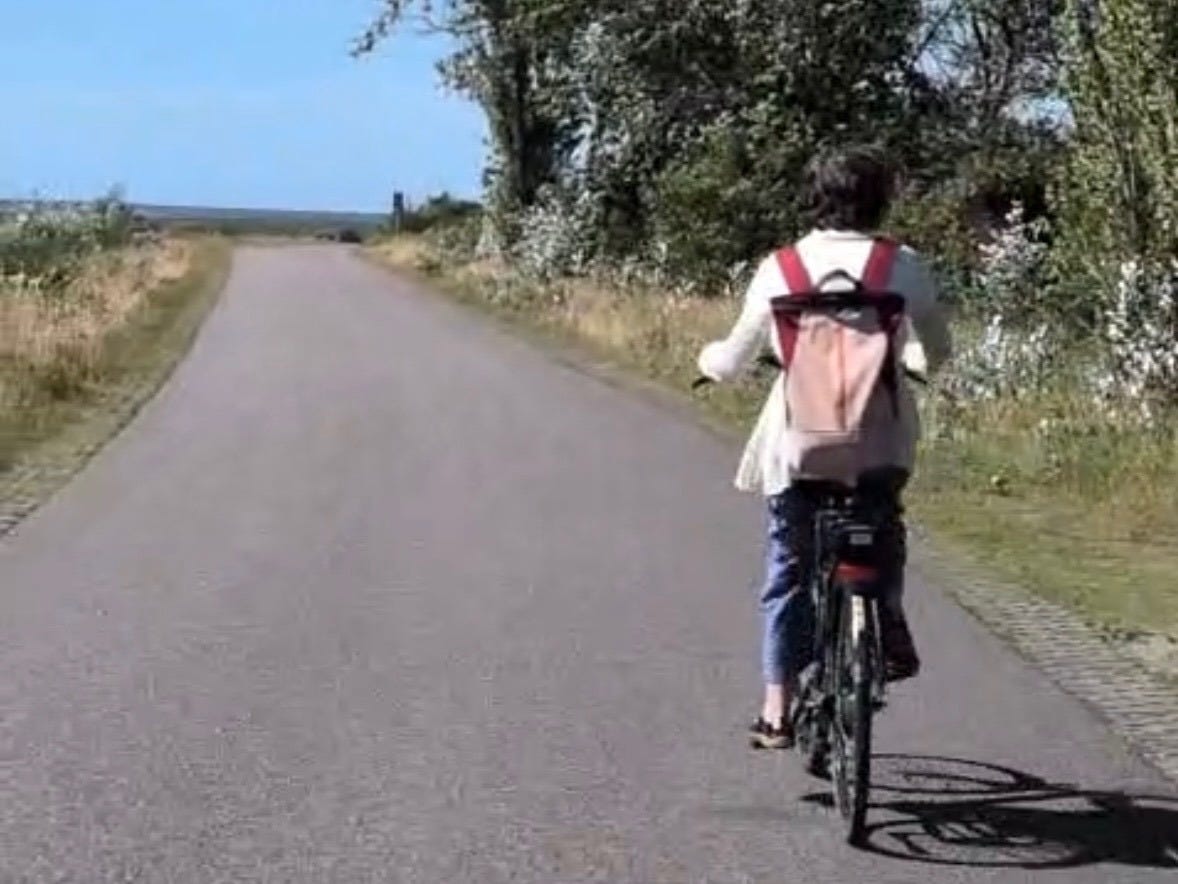
The tension I’m living right now: resting vs moving
I’m in it to get rid off this pain. To be able to stand up without limping. To keep moving way into my eighties and nineties, and stay sharp.
Tendonitis and bursitis are both inflammation conditions. They flare. They make me want to stop. And in the acute phase — when pain is sharp and almost constant — rest is genuinely necessary. I read that mild cases typically resolve in two to four weeks with proper rest and treatment, while moderate cases can linger when the root cause isn’t addressed. I am somewhere in between, learning to read what my body is telling me rather than overriding it, which has historically been my default.
You may have heard this before: you rest, you rust.
And here is what the research, and my physical therapist, confirmed: complete rest is not the answer. Improved strength in the surrounding muscles leads to less irritation to the tendons and underlying bursae. In other words, the path through is not stillness — it’s the right kind of movement. Gentle, intentional, targeted. Bridges instead of sitting squats. Flat walks instead of hills. E-bike instead of road bike. Listening instead of pushing. Stretching, more often. Learning about the fascia, the connective tissue that surrounds and supports every muscle, bone, organ, and nerve in our body.
This is the balance I’m trying to find. Some days I get it right. Some days I do too much (like a lovely 2h hike this Sunday, somehow I thought my poles would help 😆) and I feel it during the night and the next morning. Each time, I learn a little more about the difference between discomfort that heals and pain that harms.
Wherever you are
You don’t need to have tendonitis to take this seriously. The invitation is simpler than that — don’t wait to be in pain to move.
Another cute sentence: motion is lotion. Move more than you think you need to. Break up sitting more often — a two-minute walk around your home or office changes your physiology. Walk while you are on the phone. Go up and down the stairs. Do a few squats. Walk outside when you can; the combination of movement, natural light, and varied terrain does things for the brain that a treadmill doesn’t quite replicate. And when injury or pain shows up — as it might, for all of us who stay active long enough — resist the urge to either push through recklessly or stop entirely. Find the middle path. Most importantly, get help navigating it.
Listen when your body is asking for your attention.
My win today is ten minutes of PT strengthening exercises, a few gentle stretches on the floor, and simply standing up and walking to the kitchen after finishing writing a paragraph before starting the next one. All of it counts. All of it adds up — in our muscles, our joints, and quietly, steadily, in our brain.
What is your win? What works to keep your moving juicy and painless?
Be well,
Sophie 🤍